
Dark spots can linger long after a blemish, rash or small injury has settled. On melanin-rich skin, that leftover colour may be especially noticeable, but it does not mean your skin is damaged or that you need a harsh routine. Thoughtful care starts by understanding why pigment remains, reducing the triggers that keep it coming back and giving skin a consistent, low-irritation routine.
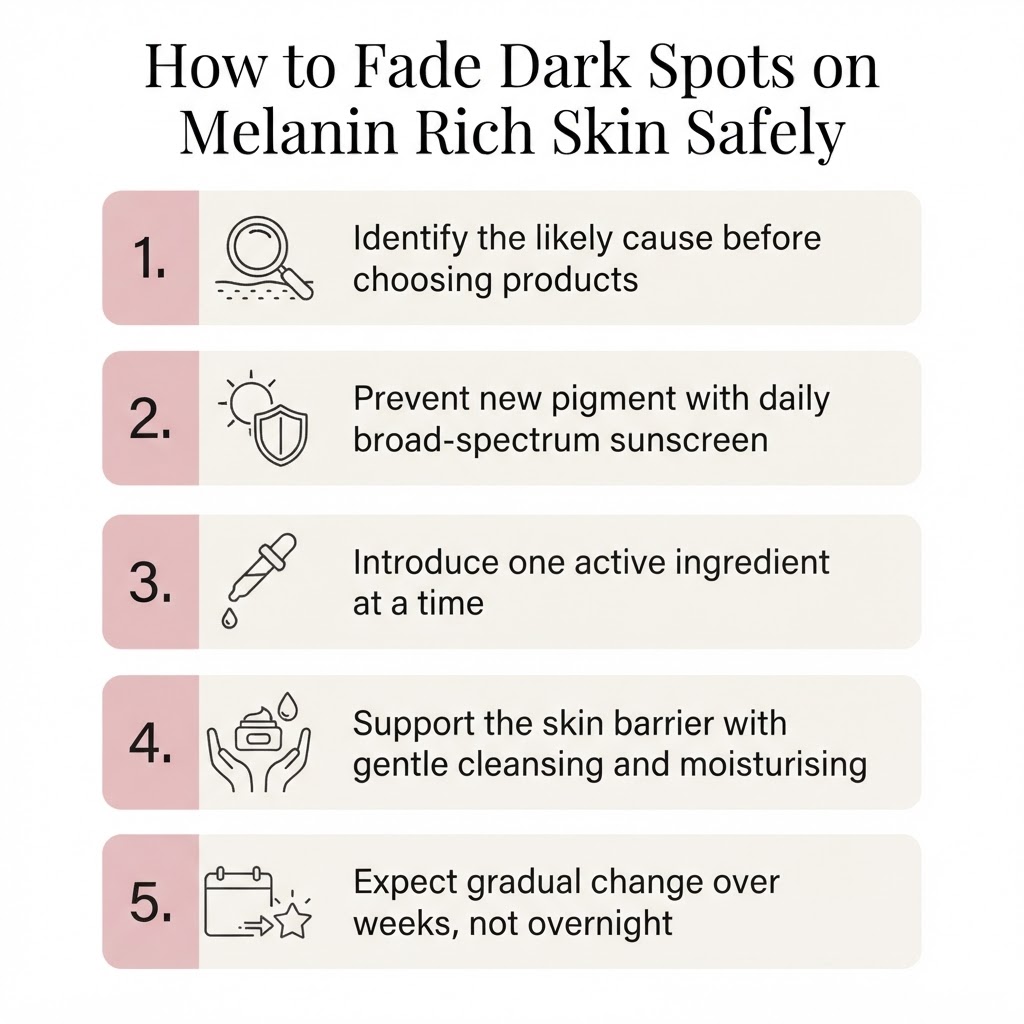
If you have been searching for how to fade dark spots on melanin rich skin, the most useful answer is not a single “brightening” ingredient. It is a plan: identify the likely cause, protect skin from ultraviolet and visible light, choose compatible ingredients, and avoid irritation that can create more discoloration. Results are gradual, and the right approach depends on whether marks follow acne, eczema, friction, sun exposure or another condition.
I’m Dr. Chomba Chuma, MD, founder of Almasi. In this guide, I’ll explain the science in practical terms and outline a routine that prioritises comfort and consistency. This is educational information, not a diagnosis; persistent, changing or unexplained pigmentation deserves an assessment by a qualified clinician.
Why dark spots form—and why they can last
Melanin is the pigment that gives skin, hair and eyes much of their colour. It is produced by cells called melanocytes and packaged into small structures that are transferred to surrounding skin cells. Melanin helps absorb some ultraviolet radiation, but it does not replace sunscreen or eliminate the risk of sun damage.
When skin experiences inflammation or injury, chemical signals can prompt melanocytes to make or distribute more pigment. The visible result may be a flat brown, grey-brown or darker mark in the area where the inflammation occurred. Dermatologists call this post-inflammatory hyperpigmentation, or PIH.
PIH can follow acne, eczema, insect bites, cuts, burns, waxing, picking or a product that irritates the skin. A pimple may disappear in days while the mark it leaves takes much longer to fade, because the inflammation has ended but pigment remains within the skin. Deeper pigment can appear more grey or slate-coloured and may take longer to improve than pigment closer to the surface.
Melanin-rich skin is not inherently more fragile. However, people with more melanin can be more prone to noticeable PIH after inflammation, and overly aggressive treatments may intensify the problem. A small study in skin of colour supports the importance of avoiding unnecessary irritation when addressing acne-associated marks; see the review on post-inflammatory hyperpigmentation in patients with skin of colour.
Other patterns of pigmentation have different causes. Melasma often appears as symmetrical patches on the cheeks, forehead or upper lip and can be influenced by hormones, heat and light. Sun spots tend to develop on chronically exposed areas. Because the treatment strategy varies, guessing from a photograph or applying several strong products at once can be counterproductive.
- Acne marks: often flat brown or grey marks where a breakout was; active acne may keep creating new ones.
- Rash-related marks: can follow itching, eczema or contact irritation and may be accompanied by dryness or sensitivity.
- Melasma-like patches: often broader and more symmetrical; consider a clinician’s assessment, especially if they persist or change.
- Raised or changing spots: need evaluation rather than a home brightening routine.
So, how to fade dark spots on melanin rich skin begins with the question: what is continuing to signal the skin to make pigment? If the trigger remains—such as untreated acne, repeated rubbing or a fragranced product causing a rash—serums alone are unlikely to solve the cycle.
“The first step in managing postinflammatory hyperpigmentation is to identify and treat the underlying cause of the inflammation.”
— American Academy of Dermatology, Skin of Color resource
Start by calming the trigger and protecting the barrier
The skin barrier is the outermost working layer of skin. It helps limit water loss and keeps irritants and microbes from entering too easily. When it is disrupted, skin may feel tight, sting when products are applied, become flaky or react to ingredients it previously tolerated.
Inflammation can affect pigment production, so a routine that repeatedly burns or peels the skin is not a shortcut. Strong scrubs, frequent exfoliating acids, high-strength retinoids introduced too quickly and unregulated lightening creams can cause irritation. On skin prone to PIH, irritation itself may leave another mark.
For a few weeks, keep the basics steady while you identify obvious triggers. If a new product causes persistent burning, swelling, itching or a rash, stop using it. A short break from optional actives can make it easier to tell what your skin is responding to.
- Use a gentle cleanser, or rinse with lukewarm water in the morning if cleansing leaves you dry.
- Apply a simple moisturiser that your skin tolerates; look for a comfortable, non-stinging formula.
- Avoid picking pimples, rubbing eczema patches, abrasive brushes and rough washcloths.
- Keep hair products, fragrance and repeated friction away from areas that are easily irritated.
- For active acne or recurring eczema, ask a clinician about controlling the condition so new marks are less likely.
People with eczema-prone skin may need to be particularly selective about when they add an active ingredient. If your skin is currently itchy, cracked or inflamed, prioritise the plan you have discussed with your healthcare professional rather than layering brightening products on top. Our guide to moisturising eczema-prone skin explains how to think about comfort and barrier support.
The skin microbiome is the community of microorganisms that naturally live on the skin’s surface. It exists alongside the barrier and is influenced by factors such as cleansing, environment and skin conditions. Microbiome-aware skincare generally aims to support a balanced skin environment, not sterilise the surface or replace medical care. For more background, read what probiotic skincare means and what it can—and cannot—do.
In Almasi’s approach, Velobiotics™ is a probiotic skincare technology used in topical formulations. A well-tolerated moisturising routine may support skin comfort, which can help make a consistent routine easier to maintain. It should not be presented as a pigment-erasing treatment; the essential work remains reducing inflammation, protecting from light and choosing suitable ingredients.
Build a routine around daily light protection
Sun exposure can darken existing marks and contribute to new uneven pigmentation. Ultraviolet A (UVA) rays can pass through clouds and window glass, while UVB is a major cause of sunburn. Visible light, including some wavelengths in daylight, can also contribute to pigmentation in some skin tones. Protection is a practical foundation, not an optional extra for sunny holidays.
Use a broad-spectrum sunscreen labelled SPF 30 or higher each morning on exposed skin. If you are outdoors for extended periods, sweating or swimming, follow the label for reapplication and choose a water-resistant product when appropriate. Hats, shade and clothing add useful protection, especially during strong midday sun.
Some people with melasma or persistent pigmentation may benefit from a tinted sunscreen containing iron oxides, which can help reduce exposure to visible light. Formulas differ, and the best sunscreen is one that suits your skin tone, feels comfortable and is used consistently. If a product leaves a cast, consider a tinted option or another formulation rather than abandoning sun protection.
Evidence supports photoprotection as part of managing melasma and pigment concerns. The American Academy of Dermatology’s melasma self-care guidance emphasises sun protection and practical habits. A review of visible light and skin also describes how light exposure may affect pigmentation, particularly in darker skin tones: visible light and skin health.
- Morning: cleanse gently if needed, apply moisturiser, then finish with broad-spectrum sunscreen.
- At the desk or by a window: consider your exposure and use sunscreen on areas receiving daylight.
- Outside: add shade, a broad-brimmed hat and protective clothing; reapply sunscreen as directed.
- For sensitive skin: test a new sunscreen on a small area first and seek advice if you develop a rash.
Here is the central answer to how to fade dark spots on melanin rich skin: prevent the mark from being repeatedly darkened while you address its cause. A targeted serum cannot reliably outpace ongoing sun exposure or recurring inflammation. Sun protection also helps make results from other ingredients more maintainable.
“Broad-spectrum sunscreen protects against both UVA and UVB rays.”
— American Academy of Dermatology, Sunscreen FAQs
Choose pigment-supporting ingredients without overloading skin
Once your skin is calm and your daily protection is in place, you can consider an ingredient aimed at uneven tone. No topical ingredient works equally for every cause or every person. Start with one product, use it as directed and give it time; changing several products together makes it difficult to identify what helps or irritates.
Niacinamide
Niacinamide, a form of vitamin B3, is used in skincare for several purposes, including supporting the barrier and helping improve the appearance of uneven tone. It is often included in moisturisers and serums, but concentration and formulation matter. If you are sensitive, choose a product designed for daily use and introduce it gradually.
Azelaic acid
Azelaic acid is used in skincare for uneven tone and acne-prone skin. It may suit people who are managing both breakouts and post-acne marks, but some users experience dryness, tingling or irritation. Product strength and regulatory status vary between countries; for prescription-strength options or persistent acne, speak with a healthcare professional.
Retinoids
Retinoids are vitamin A-related ingredients that can support skin renewal and are commonly used for acne and signs of ageing. They can also cause dryness and irritation, particularly when started too frequently or combined with other strong actives. They are not suitable for everyone; seek medical advice before using them during pregnancy or when trying to conceive.
Vitamin C and other antioxidants
Vitamin C is an antioxidant used in formulations designed to help defend against oxidative stress and improve the appearance of uneven tone. Formulas vary widely in stability, pH and tolerance, so a well-formulated product that you can use consistently is more useful than a highly concentrated product that stings. For an ingredient-focused explanation, see our guide to choosing a vitamin C serum thoughtfully.
Some people consider exfoliating acids, such as glycolic or lactic acid, to improve surface dullness. These are not essential, and frequent use can irritate skin. If your skin is reactive, eczema-prone or already using a retinoid, ask a clinician or pharmacist before adding an exfoliant.
- Patch test a new leave-on product on a small area and observe for irritation before wider use.
- Begin at a low frequency, such as a few evenings weekly, if the label allows and your skin is sensitive.
- Do not introduce multiple new actives in the same week.
- Pause the active if you develop ongoing stinging, burning, swelling or a rash.
- Keep sunscreen in the morning routine, especially when using ingredients that may increase sensitivity.
A gentle probiotic serum or moisturiser can be part of a routine for people who prefer microbiome-conscious skincare, but it should complement, not replace, proven sun protection or clinician-directed care. Explore Almasi probiotic skincare if you are looking for a serum or moisturiser to fit into a simple routine; check the ingredient list and choose according to your skin’s needs.
A practical morning and evening plan
Consistency is more valuable than a long shelf of products. Think in terms of a small routine that protects, moisturises and introduces one targeted ingredient only if your skin is comfortable. The example below is a starting framework, not a prescription.
Morning
- Cleanse gently: use a mild cleanser if you wake up oily or prefer cleansing; otherwise, lukewarm water may be enough.
- Apply one optional treatment: use a tolerated tone-supporting serum according to its label. Skip it if your skin feels irritated.
- Moisturise: apply a formula that keeps your skin comfortable without causing congestion or stinging.
- Protect: apply broad-spectrum SPF 30 or higher to exposed areas. Reapply as directed when outdoors.
Evening
- Remove sunscreen and daily grime: cleanse without scrubbing or using very hot water.
- Use one active on planned nights: for example, a suitable azelaic acid or retinoid product, if appropriate for you. Do not stack several strong actives.
- Moisturise: use a comfortable moisturiser; if an active causes persistent burning, stop and reassess.
For acne-prone adult skin, controlling new breakouts is central to preventing future marks. Picking and squeezing can intensify inflammation, and a routine that irritates the whole face can make it harder to stay consistent. If acne is painful, scarring or not improving, a dermatologist can discuss options suited to your skin tone and health history.
For eczema-prone skin, do not apply brightening actives over an active flare unless your clinician has advised it. Focus on your established eczema care, avoid known irritants and restart optional products only when the skin is settled. A stinging sensation is not evidence that a product is working.
How quickly might you see change? Pigment fades on the skin’s schedule, not the product’s marketing schedule. Surface-level marks may gradually soften over several weeks or longer, while deeper pigment and melasma can be more persistent. Take a baseline photograph in consistent lighting every month rather than checking daily, and stop if the skin becomes increasingly irritated.
This is why how to fade dark spots on melanin rich skin is best understood as a careful process, not an overnight fix. A calm routine supports consistency; consistency allows you to judge whether an ingredient is helping. If you cannot identify the cause, or if marks are worsening despite gentle care and sun protection, get professional guidance rather than escalating strength.
When to seek professional advice
Arrange a clinical assessment if pigmentation appears suddenly without a clear cause, is spreading, changes shape or colour, or comes with pain, bleeding, marked itching or a persistent rash. A new or changing spot should not simply be labelled a dark mark at home. A clinician can distinguish common pigmentation patterns from conditions that need different evaluation.
Consider a dermatologist if the marks are affecting your confidence, follow recurrent acne or eczema, or have not improved after a consistent and gentle routine. Ask specifically about options appropriate for your skin tone and history of irritation. Procedures such as peels or lasers can carry a risk of additional pigmentation if poorly selected or performed, so seek an experienced, qualified practitioner.
Be cautious of unlabelled lightening creams, products promising rapid transformation, and mixtures containing undisclosed ingredients. Certain potent prescription medicines should only be used under medical supervision; mercury-containing products are hazardous. A trustworthy product should identify its ingredients clearly and avoid pressure to pursue an unrealistic idea of “perfect” skin.
Most importantly, your natural skin tone is not a problem to solve. The goal is to reduce unwanted marks safely, prevent avoidable new ones and support skin that feels comfortable. In brief, how to fade dark spots on melanin rich skin means addressing the trigger, protecting from light and choosing a gentle, evidence-informed routine that you can sustain.
Take one simple first step today
Start by choosing and applying a broad-spectrum sunscreen you are comfortable wearing every morning; if you already do that, keep it consistent and avoid picking or rubbing the affected area. When you are ready to build a gentle routine around that foundation, explore Almasi probiotic skincare.
Subscribe to the Almasi Journal for thoughtful, science-informed guidance on skin, ingredients and everyday routines.